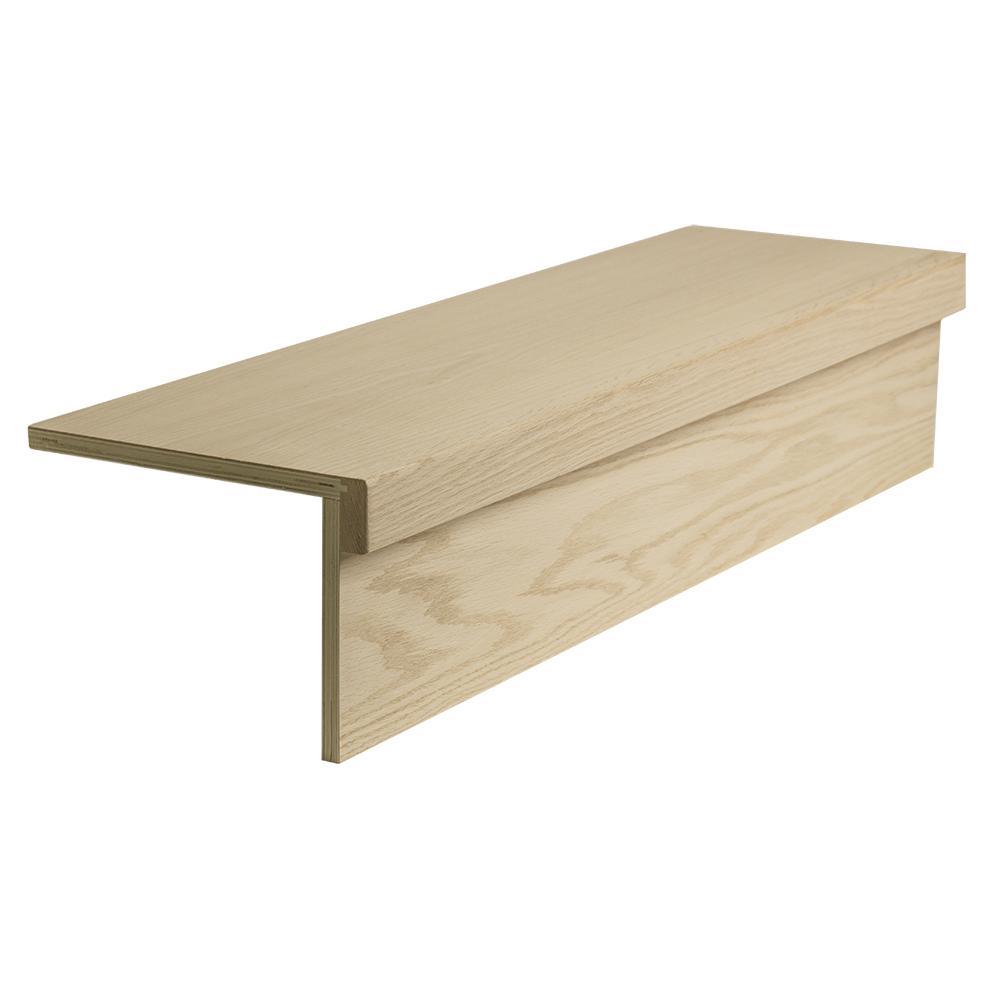
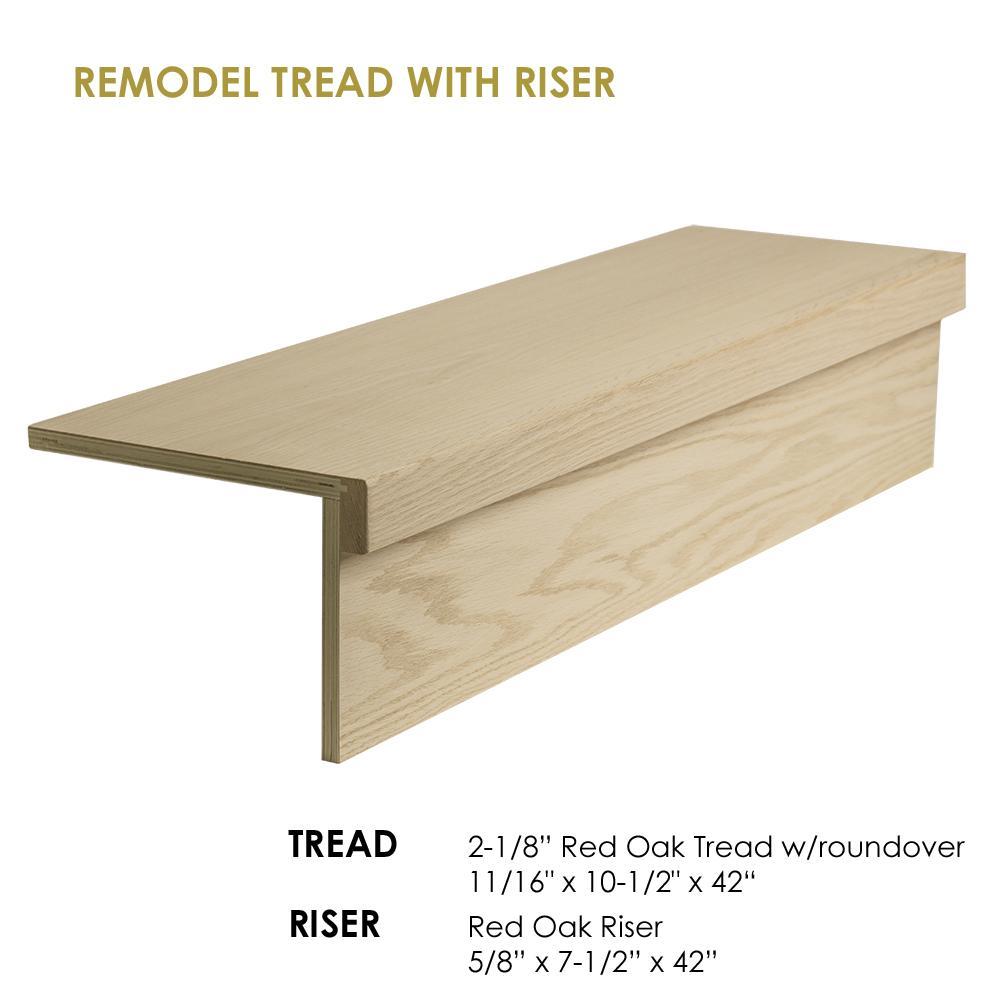
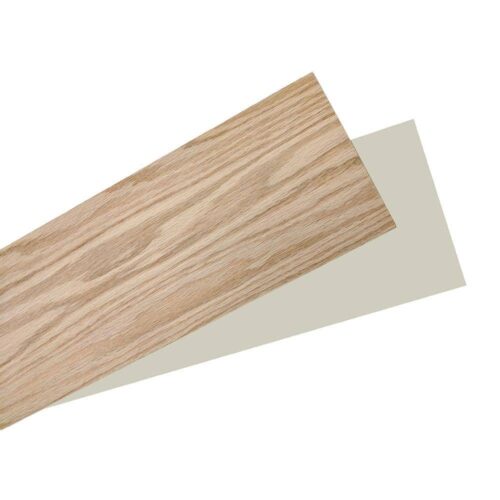
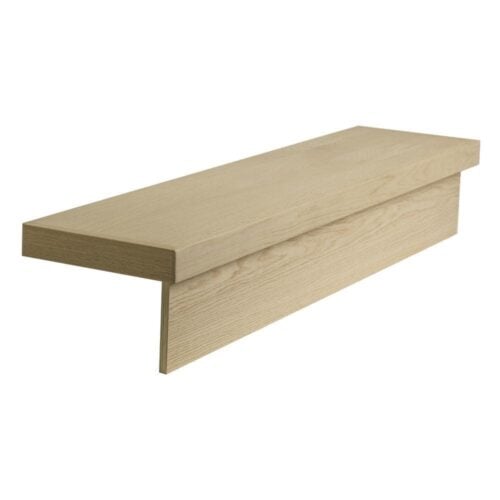
The House of Forgings 48-60″ RetroFit Return Tread Kit with Riser is designed for stair remodeling when replacing carpet with hardwood treads, available in Red Oak. This kit includes a tread with attached trim and a 7.5″ riser that is paintable or stainable. The tread measures 48″, 54″, or 60″ in length, 10.5″ in depth, with a top layer of 1/8″ thick Red Oak and an overall thickness of 11/16″. It features a return on both sides, allowing you to cut off the unused side or leave both as needed. Installation involves three steps: 1) Remove carpet, 2) Trim and glue down the retrofit tread kit, 3) Paint and stain.
Key specs:
Model: 48-60″ RetroFit Return Tread Kit with Riser.
Material: Red Oak tread with 1/8″ thick top layer.
Finish: Tread unfinished, ready to stain; riser unfinished, paintable or stainable.
Design: Return on both sides (cut off unused side or keep both).
Compatibility: Designed for stairs requiring retrofitting without extensive reframing.
Usage Tips: Remove carpet, trim and glue the tread kit to the stair, then apply paint or stain to the riser and tread as desired. Use appropriate fasteners or adhesive suitable for wood. Clean with a damp cloth and mild soap; avoid harsh chemicals to protect the finish.
Availability and lead times:
Red Oak & White Oak: Stocked and ready for immediate shipping.
Weight
12 lbs
Size
42"- Red Oak, 54" – Red Oak, 60" – Red Oak, 42"- White Oak, 54"- White Oak, 60"- White Oak
9 reviews for 48-60″ Modern RetroFit Tread Kit with Riser
I was somewhat worried as the retreads that I got on this website were significantly cheaper than other sites and thus feared that the quality may be poor when they arrived. However, was pleasantly surprised not only did they look good they were of high quality and am so delighted with the end product.
Thank you again for an affordable product that was delivered exactly as expected in protective packaging and will order again from this website
Peter Dennehy
0 of 0 found this review helpful
Rated 5 out of 5
Judith Jacobsen –
Of course the shipment arrived just fine and what appears to be in good condition. However, it arrived just a couple of days before Thanksgiving and now we are preparing for Christmas. No time right not to actually install and see how well they will work. Thanks.
0 of 0 found this review helpful
Rated 5 out of 5
Brian Conde (Verified Customer)–
na
0 of 0 found this review helpful
Rated 5 out of 5
MAITREYA PATEL (Verified Customer)–
Excellent website,product selection and staff to help you with your project. Great customer service and quick delivery, very convenient.
0 of 0 found this review helpful
Rated 5 out of 5
EP (Verified Customer)–
Good quality and condition.
0 of 0 found this review helpful
Rated 5 out of 5
Patricia Hernandez (Verified Customer)–
Quality is very great and product worked great for my stair remodel
0 of 0 found this review helpful
Rated 5 out of 5
susan cannon (Verified Customer)–
Always a great quality product. Delivery with no issues and excellent customer service.
0 of 0 found this review helpful
Rated 5 out of 5
Kevin Hochertz (Verified Customer)–
Excellent product and service !!
My customer loves the final results.
I was pleased with everything with the exception of delivery time. I ended up calling the shipper myself to schedule the delivery date and time.
Not your fault, but something to consider looking into.
Thanks for a great product !!
0 of 0 found this review helpful
Only logged in customers who have purchased this product may leave a review.


Melinda Nelson (Verified Customer) –
Prompt shipping
Peter Dennehy (Verified Customer) –
I was somewhat worried as the retreads that I got on this website were significantly cheaper than other sites and thus feared that the quality may be poor when they arrived. However, was pleasantly surprised not only did they look good they were of high quality and am so delighted with the end product.
Thank you again for an affordable product that was delivered exactly as expected in protective packaging and will order again from this website
Peter Dennehy
Judith Jacobsen –
Of course the shipment arrived just fine and what appears to be in good condition. However, it arrived just a couple of days before Thanksgiving and now we are preparing for Christmas. No time right not to actually install and see how well they will work. Thanks.
Brian Conde (Verified Customer) –
na
MAITREYA PATEL (Verified Customer) –
Excellent website,product selection and staff to help you with your project. Great customer service and quick delivery, very convenient.
EP (Verified Customer) –
Good quality and condition.
Patricia Hernandez (Verified Customer) –
Quality is very great and product worked great for my stair remodel
susan cannon (Verified Customer) –
Always a great quality product. Delivery with no issues and excellent customer service.
Kevin Hochertz (Verified Customer) –
Excellent product and service !!
My customer loves the final results.
I was pleased with everything with the exception of delivery time. I ended up calling the shipper myself to schedule the delivery date and time.
Not your fault, but something to consider looking into.
Thanks for a great product !!