
20% OFF COUPON CODE = SAVE2026

48-60″ Modern RetroFit Return Tread Kit with Riser
Select options
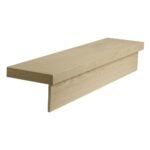
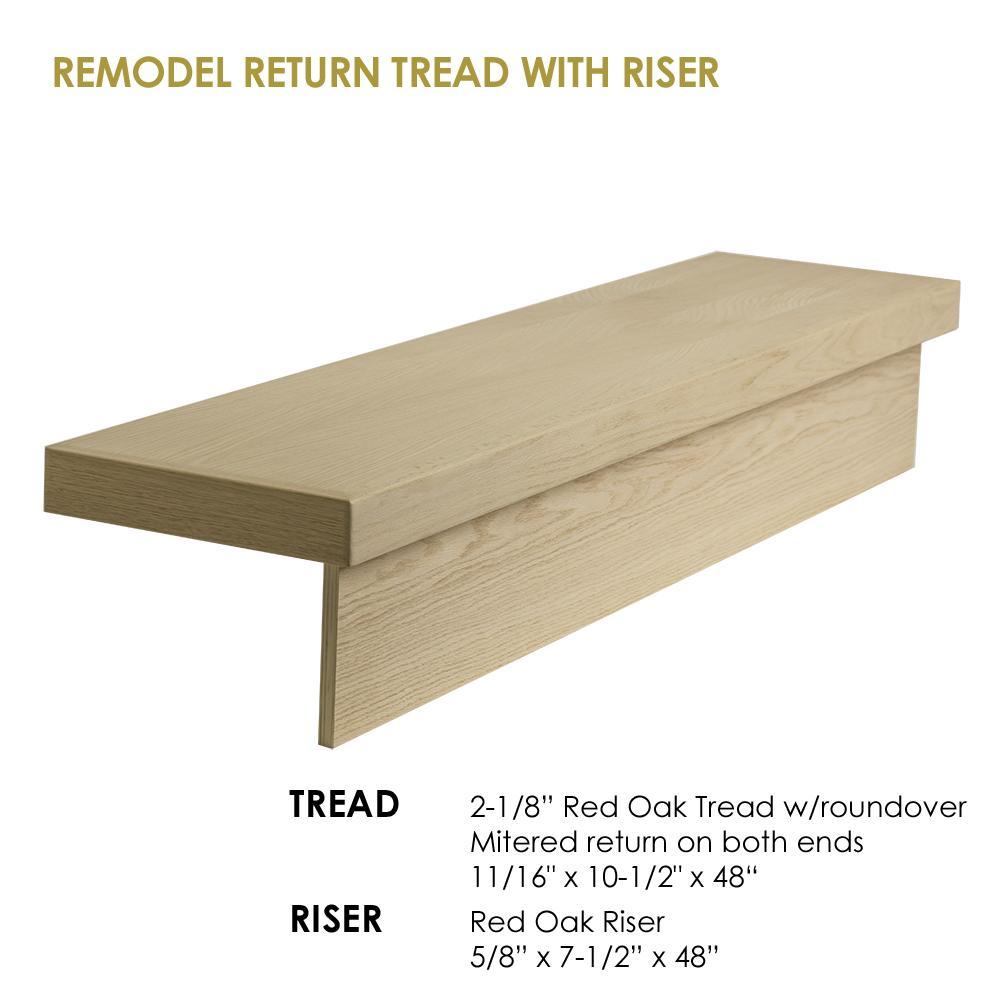
The House of Forgings 48-60″ Modern RetroFit Return Tread Kit with Riser is designed for stair remodeling when replacing carpet with hardwood treads, available in Red Oak and White Oak (product photo shows Red Oak, but White Oak is an option in the dropdown). This kit includes a tread with attached 2-1/8″ roundover nose trim and a 7.5″ riser that is paintable or stainable. The tread measures 48″, 54″, or 60″ in length, 10.5″ in depth, and 11/16″ in thickness, featuring an engineered construction with a 1/8″ thick Red Oak top layer. It has a return on both sides, allowing you to cut off the unused side or keep both as needed.
Key specs:
- Model: 48-60″ Modern RetroFit Return Tread Kit with Riser.
- Material: Red Oak or White Oak (engineered with 1/8″ thick Red Oak top layer).
- Tread Dimensions: 48″, 54″, or 60″ length; 10.5″ depth; 11/16″ thickness.
- Riser Dimensions: 7.5″ height; 48″ width; 5/8″ thickness.
- Finish: Tread unfinished, ready to stain; riser unfinished, paintable or stainable.
- Design: 2-1/8″ roundover nose trim attached; return on both sides (cut off unused side or keep both).
- Compatibility: Designed for stairs requiring retrofitting without extensive reframing.
Usage Tips: Remove carpet, trim and glue the tread kit to the stair, then apply paint or stain to the riser and tread as desired. Use appropriate fasteners or adhesive suitable for wood. Clean with a damp cloth and mild soap; avoid harsh chemicals to protect the finish.
Availability and lead times:
- Red Oak and White Oak: Stocked and ready for immediate shipping.
| Weight | 14 lbs |
|---|---|
| Size | 48" – Red Oak, 54" – Red Oak, 60" – Red Oak, 48"- White Oak, 54"- White Oak, 60"- White Oak |
7 reviews for 48-60″ Modern RetroFit Return Tread Kit with Riser
Only logged in customers who have purchased this product may leave a review.
Related products
-
Beech Stair Risers – 3/4″ x 7-1/4″ x 36-72″
Select optionsBH-RISER -
Poplar Stair Risers – 3/4″ x 7-1/4″ x 36-72″
Select optionsPR-RISER -
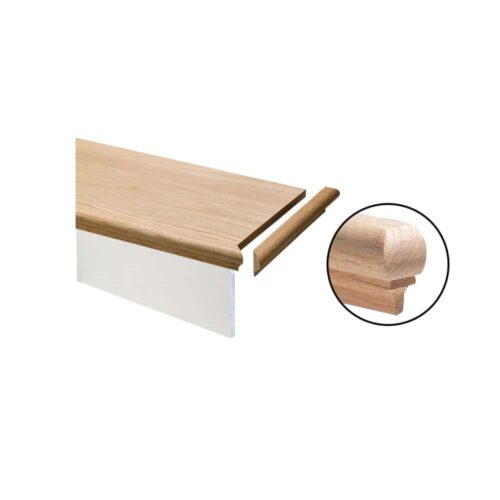
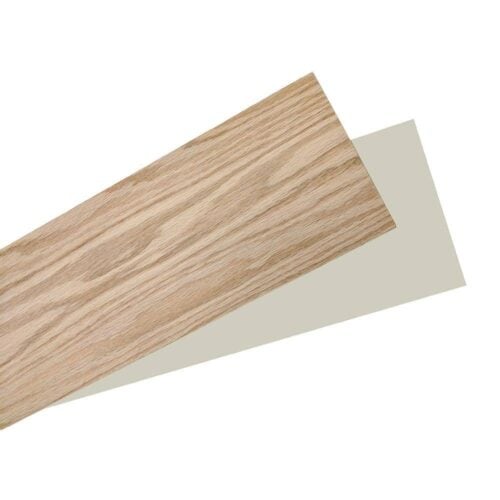
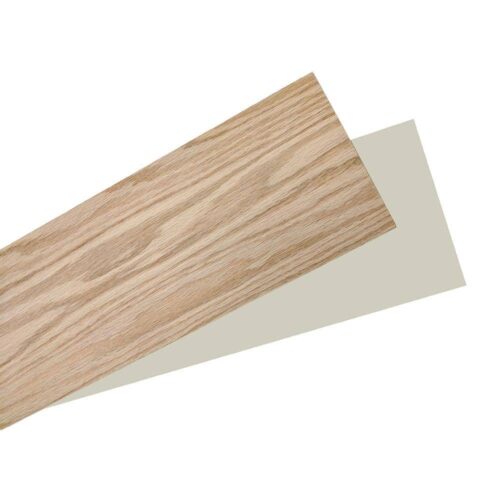
Young RetroReturn Tread Kit with Riser – 48-60″ Red & White Oak
Select optionsYM-RETRO-MR -
Walnut Stair Risers – 3/4″ x 7-1/4″ x 36-72″
Select optionsWT-RISER
SSpence (Verified Customer) –
The stair retreads I ordered became out of stock the day after my order was placed. Cheap Stair Parts called me and offered to send the larger stair tread at no extra cost to me (for neither the treads, nor the shipping) and had my order shipped that day. Their service was excellent. The stair parts arrived and were gorgeous, high-quality pieces. Very pleased with this company and would highly recommend.
Kathy Wright (Verified Customer) –
I have been looking for this product and finally found exactly what we needed for our renovation! The treads have a nice sturdy look and feel. Arriving quickly and ready to cut to our exact size, stain & varnish! No sanding necessary they are smooth and ready! So excited to see the finished project!
Laura Cousin (Verified Customer) –
We ordered modern retreads for our stair remodel. Took off ugly old carpeting and replaced with these beautiful modern Treads and risers. Love love love! Shipping was very fast received tracker however shipping companies was not fantastic it took me following up three times before they actually delivered and then we had to meet them because the truck was too big to fit on my road other than that fantastic experience I can’t wait to see these all installed
Mary Plouffe (Verified Customer) –
Great service! Great product!
Luigi Annese –
Great quality
Kelley Markowicz (Verified Customer) –
I couldn’t be happier with the quality of the product or the service of the company. They went above and beyond to help me make sure I got what I needed. Very happy!
Christopher Ames (Verified Customer) –
Exceeded expectations in every way!