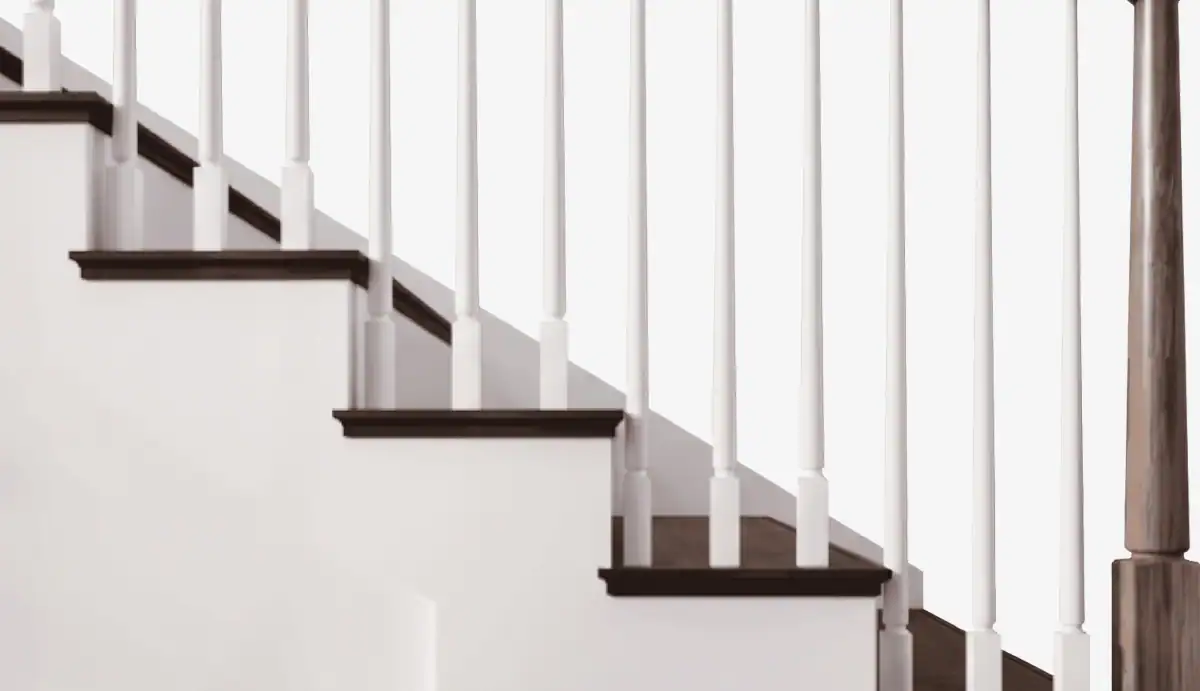
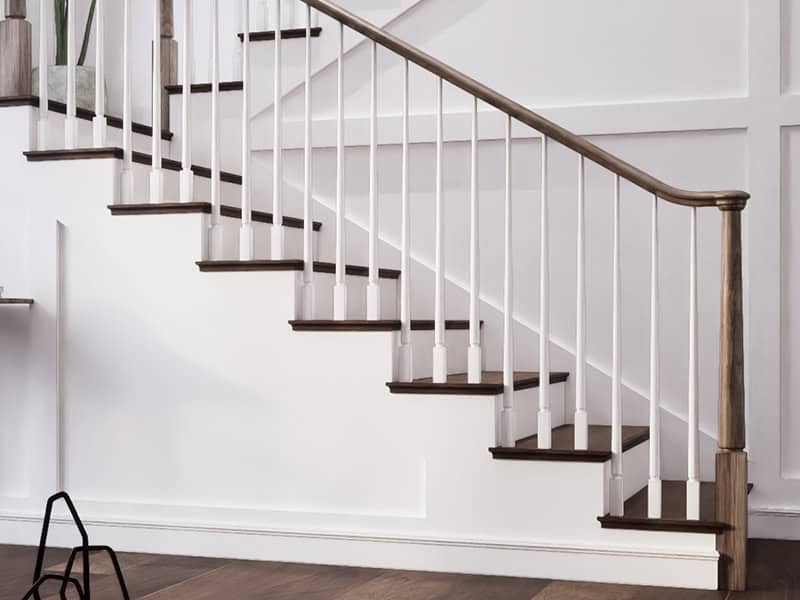
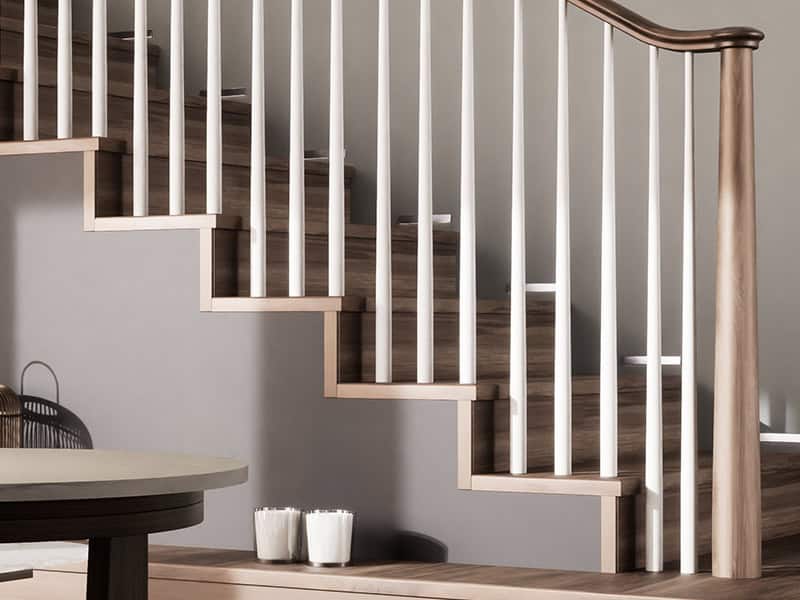
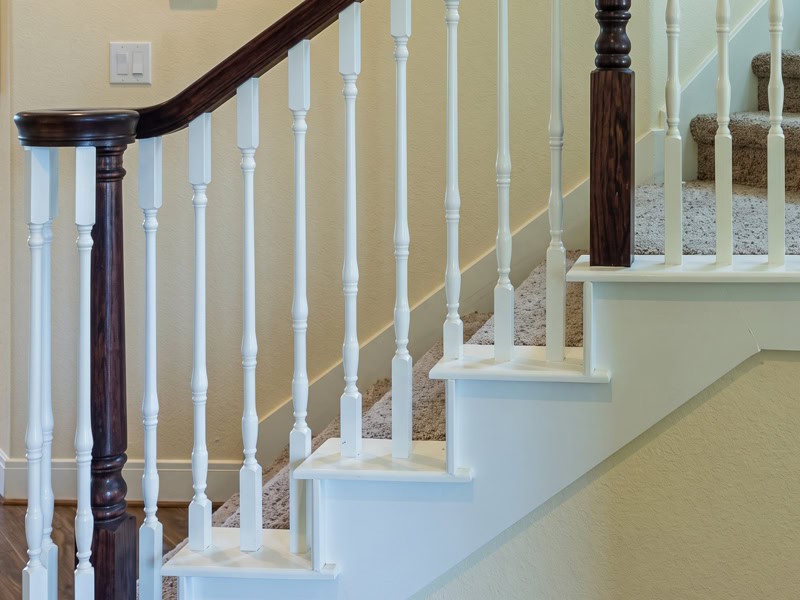
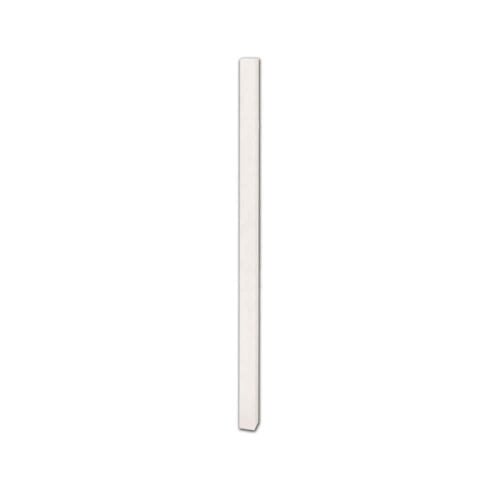
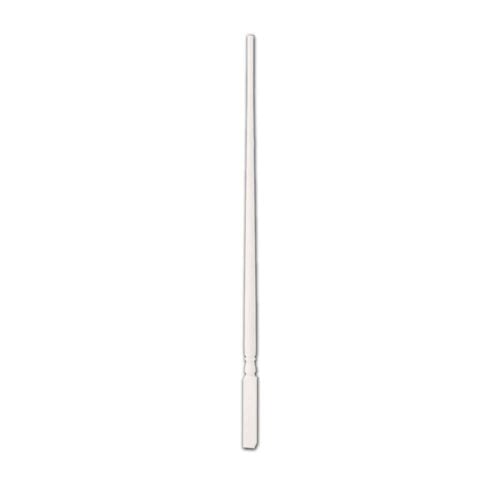
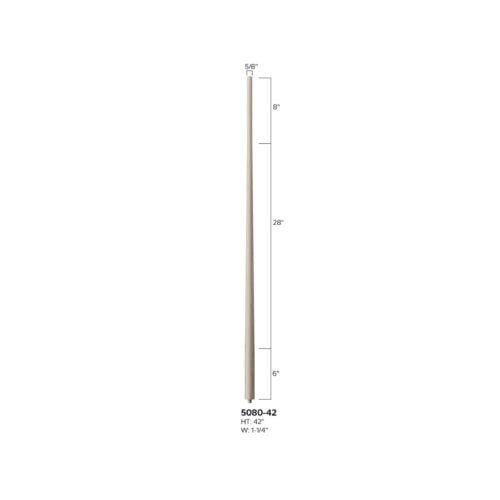
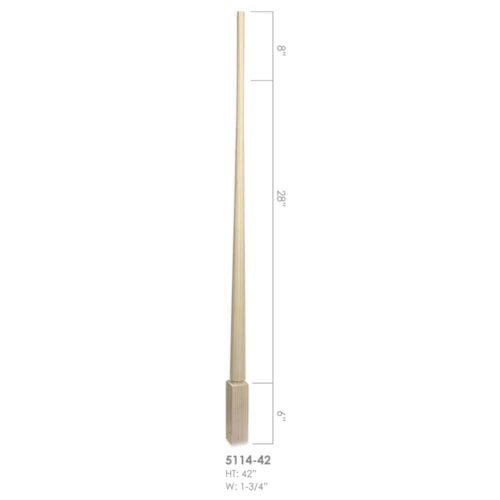
Wood balusters for staircase remodels and new construction, from clean modern designs to classic turned profiles. Free of knots and defects, and ready to stain or paint to match your trim.
By Douglas Lovin, owner of Cheap Stair Parts, 20+ years in stair parts · Updated 10/20/26
Ready to finish
Our wood balusters are free of knots and defects and ready to stain or paint. Paint-grade balusters are made of poplar and come primed white. Röhe balusters use pre-drilled holes and removable pins, and the bottoms can be cut to fit on an angle.
Spacing and building code
Just like iron balusters, wood balusters have to pass the 4-inch sphere test: if a 4″ sphere can pass through any opening in your railing, it won’t meet code. Spacing your balusters about 4 inches on center keeps every gap under that limit. Code also covers how the railing is built and anchored, so install it correctly and always check your local code. See the baluster spacing diagram.
Square or turned?
Choose square (S4S blank) balusters for a modern staircase and classic turned balusters for a traditional one. Röhe and Skandi work with a range of styles.
Wood Baluster FAQ
How many balusters do I need per step?
Most stairs need 3 balusters per step, or about one every 4 inches on center (3 per foot) on landings and balconies.
Should I choose paint-grade or stain-grade balusters?
It depends on the look you want. There’s no set rule. In my experience, people going for a traditional look with lots of wood in their home usually stain their balusters, while people going for a cleaner, simpler look choose paint grade.
Can I replace my wood balusters with iron balusters?
Yes. In fact, it’s the most common stair remodel, often called a baluster swap. Cut out your existing wood balusters, clean up the holes or the surface they sat on, and install iron balusters in the same spots. See our Iron Balusters page.
How do I install wood balusters?
Most wood balusters have a dowel on the end. Drill holes in the underside of the handrail and into the tread or floor, then glue the baluster into place with wood glue. Balusters without a dowel can be tacked into place with finish nails. Fill the nail holes with wood putty and you’re done.